
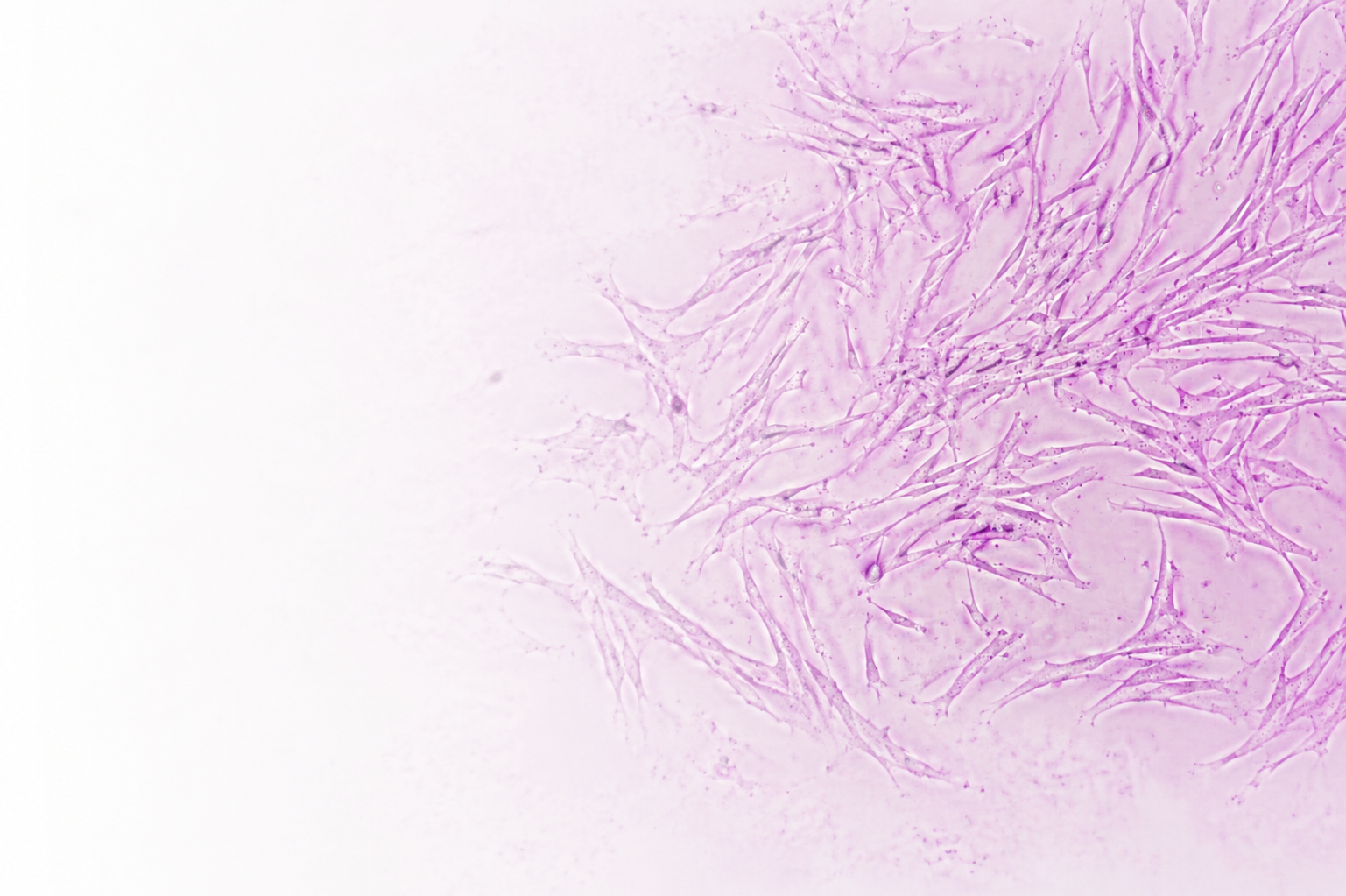
Why Process Matters: What Makes Stem4Cells Different in Regenerative Medicine
Beyond Cells: Why Technology Determines Therapeutic Quality
When discussing regenerative medicine, most conversations focus on mesenchymal stromal cells (MSCs), stem cells, or the promise of cell-free therapies such as the secretome. While these biological components are essential, they tell only part of the story.
The real differentiator lies not in simply having access to therapeutic cells—it lies in how those cells are selected, processed, expanded, and controlled before they ever reach a patient.
At Stem4Cells, we believe that regenerative medicine is not defined by cells alone. It is defined by the ability to control the biology behind them.
Biology Is Dynamic—Quality Must Be Controlled
Unlike conventional pharmaceuticals, living cells are highly responsive biological systems. Their therapeutic properties are influenced by numerous factors, including donor characteristics, culture conditions, expansion protocols, and manufacturing processes. Even MSCs isolated from the same type of tissue can exhibit significantly different biological behavior if they are processed under different conditions. This means that the quality of a regenerative therapy depends not only on the cells themselves but also on the precision of the entire production process. That understanding forms the foundation of Stem4Cells' technological platform.
A Platform Built on Precision Biological Control


Quality Begins with the Donor
Every regenerative product starts with biological material, making donor selection one of the most critical steps in the entire process. Stem4Cells implements rigorous donor qualification procedures, comprehensive biological screening, and standardized selection criteria designed to reduce variability before manufacturing even begins. Because the quality of the final therapy always begins with the quality of its source.
More Than Cell Culture: Proprietary Manufacturing Know-How
Cell isolation and expansion are often viewed as routine laboratory techniques. In reality, they represent one of the most influential determinants of therapeutic performance. Stem4Cells has developed proprietary protocols for cell isolation and expansion that have been refined through continuous optimization and practical experience. These protocols are designed to: • maximize cell viability, • preserve biological activity, • maintain the functional properties of both MSCs and their secretome, • improve consistency between production batches. This process-driven approach transforms laboratory procedures into a standardized manufacturing platform capable of producing reproducible biological products.
Why Standardization Is Essential
One of the greatest challenges in regenerative medicine is biological variability. Natural biological systems are inherently complex, but therapeutic products must deliver predictable performance. To address this challenge, Stem4Cells utilizes a structured cell banking system combined with standardized manufacturing protocols and complete process traceability. By carefully controlling starting material and production parameters, individual biological samples can be transformed into reproducible therapeutic batches suitable for clinical application.
Process Determines Biological Function
An important principle often overlooked in regenerative medicine is that manufacturing conditions directly influence biological activity. Variables such as: • donor characteristics, • culture environment, • expansion protocols, • environmental conditions, all affect how MSCs function and what signaling molecules they produce. This is particularly important because the therapeutic potential of both MSCs and their secretome depends on these biological outputs. In other words, different manufacturing conditions produce different biological products. For this reason, Stem4Cells focuses not only on controlling the final product but also on controlling every variable that shapes its biological behavior.

One Technology Platform Supporting Two Therapeutic Strategies
Modern regenerative medicine is evolving beyond traditional cell therapies. Stem4Cells has developed a technology platform capable of supporting both: • MSC-based therapies using living cells, and • secretome-based, cell-free therapeutic approaches. Because both strategies originate from the same biological system, they should not be viewed as competing technologies but as complementary therapeutic options. This integrated platform enables greater flexibility in addressing different clinical indications while supporting the development of next-generation regenerative therapies.
Why This Matters for Patients and Clinicians
For physicians and patients alike, consistency matters. A regenerative therapy should deliver predictable biological activity, reliable quality, and reproducible manufacturing—not just promising scientific concepts. By controlling every stage of development, Stem4Cells aims to reduce variability while increasing confidence in therapeutic performance. This commitment to quality, standardization, and biological consistency provides the foundation for safer, more reliable regenerative medicine.
The Future of Regenerative Medicine Is Built on Process
The future of regenerative medicine will not be defined solely by discovering new cell types or new biological signals.
It will be defined by our ability to understand, standardize, and control the complex biological systems that generate them.
At Stem4Cells, we believe that innovation begins with process.
Our technology integrates scientific expertise, proprietary manufacturing protocols, quality control, and advanced biological understanding into one controlled platform designed to support both today’s therapies and tomorrow’s regenerative solutions.
Final Thought
Our technology is not built on cells alone—it is built on controlling the biology behind them.